2026 Shardiya Navratri | October 2026 Dates
There are seasons of the year when devotion seems to awaken naturally, as though the earth itself remembers an ancient rhythm. Autumn in India carries one such quiet remembrance. The monsoon withdraws, the sky clears, and a subtle stillness spreads through the air.
It is during this season that Shardiya Navratri arrives.
For nine nights the worship of Goddess Durga, the cosmic embodiment of Shakti—the divine feminine energy—unfolds across homes, temples, villages, and cities. Lamps are lit. Mantras are chanted. Garlands of marigold and jasmine adorn altars. The rhythmic sound of devotional music drifts through the evening air.
Yet beneath these outward celebrations lies something deeper.
Navratri is not merely a festival of colour and ritual. It is a spiritual journey through nine stages of inner transformation.
In 2026, Shardiya Navratri begins on Sunday, 11 October 2026, with Ghatasthapana—the sacred invocation of the Goddess—and concludes on Tuesday, 20 October 2026, with Vijayadashami, the day symbolising the triumph of righteousness over darkness.
Each day of Navratri is dedicated to one of the nine forms of Goddess Durga, known as the Navadurga. Each day also carries a symbolic colour, believed to represent a particular spiritual quality.
These colours are not merely aesthetic choices.
They are reminders that devotion, like the moon, unfolds gradually—from awakening to illumination.
The Meaning of Shardiya Navratri
The Festival of Divine Feminine Energy
The word Navratri literally means “nine nights”.
During these nine nights, devotees honour the divine feminine power that sustains the universe.
In Hindu philosophy, this power is known as Shakti.
Shakti is not merely a goddess among many. She is the creative force behind existence itself.
Everything that moves, grows, transforms, and renews is believed to arise from her energy.
Navratri therefore celebrates the victory of this sacred energy over forces that diminish harmony and truth.
Why It Is Called Shardiya Navratri
Navratri occurs several times during the year, but the most widely celebrated is Shardiya Navratri, which falls during Sharad Ritu, the autumn season.
The term Shardiya comes from Sharad, meaning autumn.
During this time the sky becomes clearer after the rains, symbolising the clarity that emerges after inner struggle.
Thus the season itself becomes a metaphor.
Just as the clouds disperse from the sky, spiritual practice during Navratri aims to disperse the clouds of confusion from the mind.
Ghatasthapana: The Beginning of Navratri
The Sacred Kalash Ritual
Navratri begins with Ghatasthapana, the ritual installation of a sacred pot known as the Kalash.
The Kalash is filled with water and topped with mango leaves and a coconut. Barley seeds are often sown around it, symbolising fertility and new life.
This ritual marks the invocation of the Goddess into the home or temple.
Spiritually, Ghatasthapana represents the awakening of divine consciousness within the human heart.
The Nine Forms of Goddess Durga
Each day of Navratri honours one of the nine forms of Durga.
Together they represent a spiritual progression—from awakening to wisdom.
The nine forms are:
Shailputri
Brahmacharini
Chandraghanta
Kushmanda
Skandamata
Katyayani
Kalaratri
Mahagauri
Siddhidatri
Each form embodies a distinct aspect of spiritual energy.
Shardiya Navratri 2026 Dates & Day-Wise Devi Pujan and Colours
Below are the Shardiya Navratri 2026 dates and colours of the day according to the Hindu calendar followed in India.
Shardiya Navratri Day 1 – 11 October 2026 (Sunday)
Goddess Shailputri Puja
The first day of Navratri is dedicated to Goddess Shailputri, the daughter of the Himalayas.
She represents stability, grounding, and the awakening of spiritual consciousness.
Colour of the Day – Orange
Orange symbolises energy, enthusiasm, and sacred aspiration.
It reminds devotees that the spiritual journey begins with courage and determination.
Shardiya Navratri Day 2 – 12 October 2026 (Monday)
Goddess Brahmacharini Puja
Brahmacharini represents penance, discipline, and unwavering devotion.
Her name suggests one who walks the path of self-control and spiritual focus.
Colour of the Day – White
White represents purity and serenity.
It reflects the calmness that arises when the mind turns away from restlessness and towards inner silence.
Shardiya Navratri Day 3 – 13 October 2026 (Tuesday)
Goddess Chandraghanta Puja
Chandraghanta is a warrior form of Durga who removes fear and protects devotees.
Her name refers to the crescent moon that adorns her forehead.
Colour of the Day – Red
Red symbolises power, courage, and divine strength.
It represents the active energy that destroys negativity.
Shardiya Navratri Day 4 – 14 October 2026 (Wednesday)
Goddess Kushmanda Puja
Kushmanda is believed to be the cosmic creator who brought the universe into existence with her divine smile.
Colour of the Day – Royal Blue
Royal blue represents depth, wisdom, and cosmic awareness.
It reminds devotees of the vastness of divine creation.
Shardiya Navratri Day 5 – 15 October 2026 (Thursday)
Goddess Skandamata Puja
Skandamata is the mother of Lord Kartikeya.
She symbolises maternal protection and compassion.
Colour of the Day – Yellow
Yellow represents knowledge, clarity, and auspiciousness.
It reflects the warmth of divine grace.
Shardiya Navratri Day 6 – 16 October 2026 (Friday)
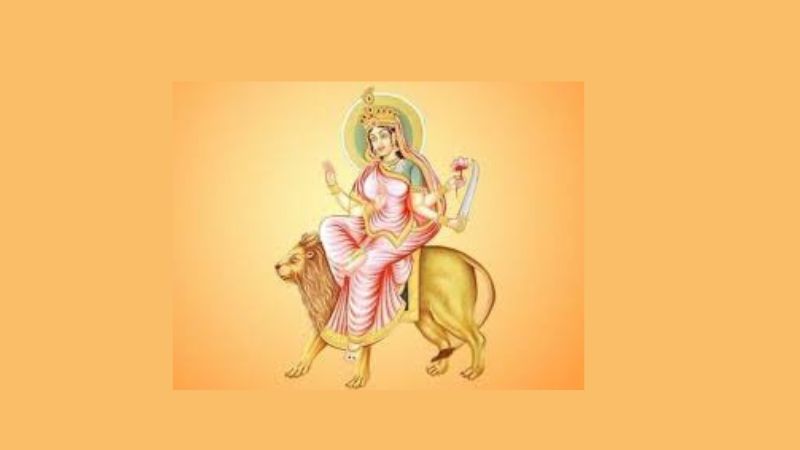
Goddess Katyayani Puja
Katyayani is a fierce form of Durga created to destroy the demon Mahishasura.
She symbolises courage and righteous action.
Colour of the Day – Green
Green represents renewal and harmony.
It reminds devotees of growth and balance.
Shardiya Navratri Day 7 – 17 October 2026 (Saturday)
Goddess Kalaratri Puja
Kalaratri is one of the most powerful forms of Durga.
She represents the destruction of ignorance and fear.
Colour of the Day – Grey
Grey symbolises neutrality and balance.
It reflects the calm strength required to face darkness.
Day 8 – 18 October 2026 (Sunday)
Mahagauri Puja
Mahagauri symbolises purity, forgiveness, and compassion.
Colour of the Day – Purple
Purple represents spirituality and inner transformation.
It reminds devotees of the higher wisdom that arises through devotion.
Shardiya Navratri Day 9 – 19 October 2026 (Monday)
Durga Ashtami and Maha Navami
This day is among the most sacred of Navratri.
Special rituals such as Sandhi Puja are performed during the transition between Ashtami and Navami.
Sandhi Puja Timing (New Delhi):
10:27 AM – 11:15 AM
Colour of the Day – Peacock Green
Peacock green symbolises prosperity, harmony, and divine beauty.
Shardiya Navratri Day 10 – 20 October 2026
Vijayadashami (Dussehra)
Navratri concludes with Vijayadashami, the day that celebrates the victory of good over evil.
The day commemorates:
• Lord Rama’s victory over Ravana
• Goddess Durga’s triumph over Mahishasura
Ayudha Puja
In many regions tools, books, and instruments are worshipped on this day, symbolising respect for knowledge and work.
The Spiritual Meaning of Shardiya Navratri 2026 Colours
The colours associated with Navratri are more than festive traditions.
They reflect the inner journey of the seeker.
Orange begins the journey with aspiration.
White purifies intention.
Red awakens courage.
Blue deepens awareness.
Yellow brings wisdom.
Green restores harmony.
Grey encourages balance.
Purple reveals spirituality.
Peacock green celebrates divine beauty.
Together these colours form a spectrum of spiritual evolution.
Shardiya Navratri as an Inner Journey
Navratri can be understood as a symbolic journey through the human psyche.
The first days represent the awakening of energy.
The middle days represent struggle and purification.
The final days represent illumination and victory.
This progression mirrors the spiritual path described in many ancient traditions.
Why Shardiya Navratri Still Matters Today
In the modern world, life often becomes hurried and fragmented.
Navratri offers a rare pause.
For nine nights, devotion slows the rhythm of everyday life.
Families gather for prayer. Temples glow with lamps. Music fills the evening air.
But perhaps the most meaningful transformation happens quietly within the heart.
A Reflection Beneath the Autumn Moon
If one stands outside during Navratri nights, the sky often appears unusually clear.
The monsoon clouds have withdrawn, leaving a deep expanse of blue by day and luminous stars by night.
In that vast stillness, the festival begins to reveal its deeper meaning.
Navratri is not only about celebrating the Goddess.
It is about remembering that the same divine energy lives quietly within us.
The nine nights are an invitation.
To become stronger.
To become wiser.
To become more compassionate.
And perhaps, by the time the tenth day arrives and the lamps of Vijayadashami are lit, the victory we celebrate outside has already begun within.