Maha Shivaratri 2027: Date, Puja Muhurat, Vrat, Mantras and Spiritual Significance
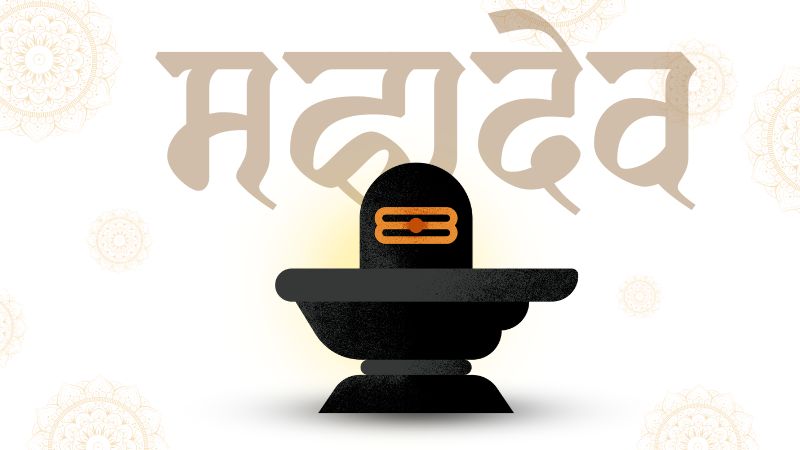
There are nights in the sacred calendar that do not merely arrive; they descend. They do not pass over human life like ordinary dates. They enter it. Maha Shivaratri is one such night. It comes not as spectacle alone, though temples blaze and bells resound, but as an inward summons. It asks the devotee to become still, to fast, to wake, to remember, and to stand before the mystery of Lord Shiva with less noise within. In the Hindu calendar, Maha Shivaratri is observed on the Krishna Paksha Chaturdashi of Phalguna, and in 2027 it falls on Saturday, 6 March 2027. For devotees in India, it is the great nocturnal vigil of Shiva worship, marked by fasting, fourfold night worship, mantra, abhisheka, and prayer until dawn.
The beauty of Maha Shivaratri lies partly in its austerity. Unlike festivals built only on abundance, this one is deepened by restraint. One eats less, speaks less, sleeps less, and prays more. The outer reduction is meant to create inner spaciousness. That is why the festival has remained alive for centuries: it speaks not only to religion, but to the human need for purification, focus, surrender, and renewal. Britannica notes that devotees traditionally fast the preceding day and keep a night vigil in worship of the Shiva lingam, with prayer and sacred storytelling continuing through the night. (
Maha Shivaratri 2027 date and puja muhurat
For New Delhi, India, Maha Shivaratri will be celebrated on Saturday, 6 March 2027. The same source gives the full set of worship windows used by many devotees for home and temple observance, including Nishita Kaal, the four prahars of the night, the parana window on the following morning, and the Chaturdashi tithi span itself. Because these timings are location-sensitive, they should be treated as New Delhi / IST timings rather than universal timings for every city.
Maha Shivaratri 2027 puja timings for New Delhi
Nishita Kaal Puja Time
12:07 AM to 12:57 AM, 7 March 2027. This is the midnight-centred worship window and is widely regarded as especially auspicious for Shiva Puja.
Ratri First Prahar Puja Time
6:24 PM to 9:28 PM, 6 March 2027.
Ratri Second Prahar Puja Time
9:28 PM to 12:32 AM, 7 March 2027.
Ratri Third Prahar Puja Time
12:32 AM to 3:36 AM, 7 March 2027.
Ratri Fourth Prahar Puja Time
3:36 AM to 6:40 AM, 7 March 2027.
Shivaratri Parana Time
6:40 AM to 1:46 PM, 7 March 2027. This is the window for breaking the fast after the night observance.
Chaturdashi Tithi Begins
12:03 PM on 6 March 2027.
Chaturdashi Tithi Ends
1:46 PM on 7 March 2027.
Why Nishita Kaal matters
Nishita Kaal is not simply “midnight” in the casual sense. In ritual language, it marks the deepest stillness of the night, the inner centre of darkness, the hour when outer activity is least and symbolic inwardness is greatest. Because Shiva is so often approached as the silent, formless, ascetic principle beyond restless becoming, the midnight worship of Maha Shivaratri carries a particular emotional and spiritual intensity for devotees. Panchang Nishita Kaal as the chief worship window, while traditional observance also honours all four prahars for those who wish to perform the full night vigil.
Why Maha Shivaratri is spiritually important
Britannica describes Maha Shivaratri as the most important sectarian festival of the year for Shiva devotees, and notes that worship on this night is believed to confer extraordinary religious and worldly benefits, including progress toward moksha, or liberation. That older language can sound grand, but its essence is simple: this is considered a night when devotion is amplified, when consciousness is steadied, and when austerity becomes grace-bearing.
Maharashtra Tourism similarly describes the festival as a day of spirituality, fasting, meditation, and self-purification. That combination is revealing. Maha Shivaratri is not merely remembrance of myth; it is a discipline of the body, mind, and heart. It asks the devotee to simplify desire, reduce distraction, and turn toward Shiva not merely as deity, but as the principle of transformation itself.
Shiva as stillness, destruction, and renewal
Shiva is often misunderstood when only the language of destruction is emphasised. In Hindu theology, his destruction is not pointless devastation but sacred clearing. He dissolves what is exhausted, false, overgrown, egoic, or ripe for transformation. That is why Maha Shivaratri can feel so intimate to seekers: it is the night in which one offers not only flowers and water, but burdens, patterns, noise, pride, fatigue, and fear. The worship of Shiva on this night becomes, in its deepest sense, a request to be inwardly remade.
The legends of Maha Shivaratri
Like many ancient Hindu festivals, Maha Shivaratri is not confined to a single exclusive legend. Britannica notes several major narratives associated with it: the marriage of Shiva and Parvati, the emergence of the Shiva lingam as lingodbhava, Shiva’s drinking of the poison halahala during Samudra Manthana, and the destruction of the triple cities of Tripura. The plurality is itself meaningful. Hindu sacred time often carries more than one truth at once.
The marriage of Shiva and Parvati
One of the most beloved traditions sees Maha Shivaratri as the night of Shiva’s marriage to Parvati. In that interpretation, Shiva represents pure consciousness and Parvati represents Shakti, the dynamic energy of manifestation. Their union is not merely marital symbolism; it expresses a metaphysical truth. Consciousness without energy does not create; energy without consciousness does not illumine. Their meeting suggests wholeness. It is one reason family households also cherish Maha Shivaratri, not only ascetics and seekers.
Shiva drinks the poison
Another powerful legend links Maha Shivaratri to the churning of the cosmic ocean. When the deadly poison halahala emerged, Shiva consumed it to protect creation, holding it in his throat and thereby becoming Neelkanth, the blue-throated one. Maharashtra Tourism and Britannica both include this legend among the central explanations of the festival’s significance. Spiritually, it is one of the most moving Shiva narratives: the divine absorbs poison so that life may continue.
There is a tender human meaning hidden there. Many devotees love Shiva not only because he is vast, but because he takes into himself what others cannot bear. The poison legend makes him protector, witness, absorber of suffering, and guardian of the world’s fragile balance. On Maha Shivaratri, when people offer milk, water, bilva leaves, and prayer, they are also remembering this aspect of him: the one who bears darkness without surrendering to it.
The infinite column of light
Britannica also notes the association of Maha Shivaratri with lingodbhava, the emergence of Shiva as an endless column of light, symbolising his formless and infinite nature. This legend underlies the deep importance of worshipping the Shiva lingam on this night. The lingam, in this theological context, is not simply an object of ritual. It is a sign of the ungraspable, beginningless, endless reality that exceeds name and form.
The hunter and the night vigil
A popular vrat katha is the story of a hunter named Guru-Druha whose unintentional offerings and night vigil before a Shiva lingam became salvific. The moral shape of this tale is deeply Indian and deeply beautiful: sincerity, even when unadorned and imperfect, can draw grace. Shiva is not portrayed as difficult to please. He is moved by earnestness, wakefulness, and even accidental devotion that springs from innocence rather than calculation.
Fasting on Maha Shivaratri: rules, spirit, and caution
Fasting, or vrat, is one of the defining disciplines of Maha Shivaratri. Britannica says the participant traditionally fasts on the preceding day and keeps vigil at night. Modern Hindu calendars and festival guides continue this pattern, while acknowledging that intensity varies by household, health, and lineage.
What the fast usually involves
In practice, devotees observe Maha Shivaratri fasting in several ways. Some keep a strict nirjala fast without food or water for part or all of the observance; others take water, milk, fruit, or vrat-friendly foods and avoid grains, pulses, onion, garlic, meat, and intoxicants. Contemporary festival guidance consistently notes that observance varies by region and personal capacity. The core principle is restraint joined to devotion, not punishment for its own sake.
The spiritual meaning of fasting
The spiritual logic of fasting is not merely dietary. One reduces food to reduce heaviness, tamas, and distraction; one simplifies appetite so the mind can hold mantra more easily. Maharashtra Tourism explicitly links fasting on Mahashivratri with self-purification and deeper spiritual focus. In that sense, the fast is an aid to prayer, not an end in itself.
Fasting on this night also carries a psychological gentleness when rightly understood. Hunger reveals habit. It shows how quickly the body asks to be satisfied and how restlessly the mind bargains with discomfort. If the fast is held with dignity, patience, and self-awareness, it can become a day of inner observation. That is where its spiritual value lies.
Practical vrat rules many devotees follow
On the previous day
Many devotees begin simplifying food on Trayodashi or the day before, avoiding heavy or tamasic meals and entering Shivaratri with more alertness than usual. This pattern accords with the older description of fasting before the night vigil.
On Maha Shivaratri day
Common observances include bathing early, wearing clean clothes, keeping the mind calm, avoiding anger and harsh speech, taking a sankalpa for the fast, and dedicating the day to japa, Shiva worship, and scriptural reading. Temple and guide sources also describe daylong prayer, evening puja, and night vigil.
During the night
Many devotees remain awake through all four prahars, performing abhisheka and mantra japa in each segment. Others do a single puja during Nishita Kaal if a full vigil is not practical.
Breaking the fast
The fast is traditionally broken during the Shivaratri Parana window after sunrise on the next day, once the required observance is complete. For New Delhi in 2027, that window is 6:40 AM to 1:46 PM on 7 March.
A necessary note on health
There is a difference between spiritual discipline and physical harm. Reviews of intermittent fasting suggest that fasting can improve some metabolic markers in certain adults, but these findings do not mean every form of severe fasting is suitable for every person. Evidence also indicates that extreme or chronic sleep deprivation is harmful. So, from a health standpoint, a devotional vigil should be understood as a special, limited observance, not a routine replacement for sleep or medical care. People who are elderly, pregnant, diabetic, unwell, or taking medicines should adapt the vrat sensibly.
Puja vidhi for Maha Shivaratri
The ritual life of Maha Shivaratri is built around reverence, repetition, and sacred substances. Temples and households may vary in sequence, but the broad structure remains recognisable across traditions: purification, sankalpa, invocation, abhisheka, bilva offering, mantra, aarti, and vigil. Maharashtra Tourism describes the key ritual as Shivling worship through abhishekam using holy water, milk, honey, ashes, and bel leaves, accompanied by fasting, meditation, and jagaran.
Preparing the space
Clean the altar or puja place
The worship space is cleaned and arranged with a Shiva lingam or image, lamp, incense, flowers, bilva leaves, water, milk, curd, honey, sugar, sandal paste, fruits, and offerings according to capacity. The atmosphere matters because ritual is not only what one offers outwardly, but how one prepares inwardly.
Take sankalpa
A sankalpa is the conscious resolve to observe the vrat and perform Shiva Puja with devotion. It marks the difference between habit and holy intention.
The abhisheka sequence
Abhisheka is central to Shivaratri worship. Water, milk, curd, honey, and other substances may be poured over the lingam while mantras are chanted. Maharashtra Tourism specifically mentions Ganga Jal, milk, honey, ashes, and bel leaves among the sacred offerings used in Shivling worship on this festival.
Water
Water is the simplest and most universal offering. It cools, purifies, and humbles. In Shiva worship, water often carries the feeling of surrender: the devotee offering not grandeur, but the essential.
Milk
Milk is widely used in abhisheka and in popular devotion symbolises cooling grace and tenderness. Its ritual use is widespread, though practices vary by temple and household.
Honey, curd, sugar, and other substances
These may be part of a fuller abhisheka sequence in some traditions, particularly temple or home pujas that follow panchamrit patterns.
Offering bilva leaves
Bilva, or bel patra, occupies a special place in Shiva worship. The Art of Living’s explainer notes that bilva leaves are considered especially dear to Shiva, and that their trifoliate form is traditionally interpreted as representing the Trinity and Shiva’s three eyes. Maharashtra Tourism likewise identifies bel patra as one of the most important natural offerings of Mahashivratri.
The deeper symbolism is beautiful in its simplicity. A leaf is among the humblest of offerings. To place bilva on the lingam is to say that the ordinary, given with devotion, is sufficient. Shiva is a deity of elemental things: ash, mountain, river, leaf, stone, silence. He receives the simple without disdain.
Four Prahar worship
Many devotees perform Shiva Puja four times during the night, once in each prahar. The ritual may be repeated with fresh water, bilva leaves, mantra japa, and aarti in each segment. The fourfold division creates not only order but depth: the night becomes a long arc of repeated remembrance rather than a single brief act.
Mantras for Maha Shivaratri and their traditional benefits
Mantras on Maha Shivaratri are not ornamental additions. They are among the main ways the night is inhabited. Through repetition, the mind is given one sound to return to, one axis around which distraction may gradually loosen.
Om Namah Shivaya
The Panchakshari mantra
“Om Namah Shivaya” is the best-known Shiva mantra and is especially associated with nightlong chanting on Maha Shivaratri. Temple and guide sources repeatedly mention it as the core chant of the observance. Sri Kalahasti’s festival guide says devotees believe that staying awake and chanting “Om Namah Shivaya” through the night grants liberation; even where one treats that as devotional belief rather than measurable claim, it clearly reflects the mantra’s centrality.
Traditional benefit
Traditionally, this mantra is said to purify the mind, stabilise attention, deepen devotion, and draw the devotee closer to Shiva. Its power in practice lies partly in repetition itself: it gradually replaces mental clutter with a single, steady current.
Maha Mrityunjaya Mantra
The healing mantra
The Maha Mrityunjaya Mantra is often recited for protection, healing, courage, and release from fear. Though not unique to Shivaratri, it is especially beloved on this night because of Shiva’s identity as conqueror of death and granter of fearlessness. This is a long-established devotional association in Shaiva practice.
Traditional benefit
Devotees recite it for inner resilience, peace during illness, and strength in times of uncertainty. These are devotional and psychological benefits rather than guarantees of specific outcomes.
Rudram and Shiva stotras
In temple settings, Vedic chant traditions such as Rudram may be heard, along with Shiva stotras, bhajans, and local hymns. At major temples, the atmosphere of collective sound becomes a form of shared meditation.
Meditation techniques for Maha Shivaratri
Maha Shivaratri is not only a ritual night; it is also, in many traditions, a meditation night. Isha describes it as highly significant in the yogic tradition and frames the night as an opportunity for intensified meditative experience, while Maharashtra Tourism explicitly connects the festival with meditation and self-discipline. These are spiritual interpretations, but they reflect a long and living practice tradition.
Breath-centred Shiva meditation
How to do it
Sit with the spine comfortably upright. Let the breath slow without force. With each inhalation and exhalation, mentally repeat “Om Namah Shivaya.” Keep the eyes gently closed or half closed. If thoughts rise, let them pass without argument and return to breath and mantra. This simple method suits home observance and can be practised between puja segments. The underlying logic is consistent with mantra-based and mindfulness-based meditation forms.
Why it fits Maha Shivaratri
Shiva is often approached as the still witness. Breath meditation with mantra allows the devotee to move toward stillness without passivity. The mind is occupied, but gently. The heart is devotional, but not agitated.
Trataka on a diya flame
How to do it
Place a lamp at eye level in a quiet room. Gaze softly at the flame without strain for a short period, then close the eyes and observe the after-image. This can be followed by silent mantra japa. It should be done gently and not for long if the eyes tire. Trataka is a traditional yogic focusing practice, and on Shivaratri it can support wakefulness and single-pointedness.
Japa meditation with mala
How to do it
Repeat a Shiva mantra on a rudraksha or other mala, bead by bead, maintaining a steady rhythm. This gives the restless body and the restless mind something simple and sacred to do together. Such repetition is often more accessible during a long vigil than abstract concentration alone.
Silent witnessing
How to do it
After chanting or puja, sit quietly for a few minutes with no verbal prayer. Observe thoughts, sensations, and emotion without following them. In a Shiva context, this can be understood as meditation on the witness-consciousness itself. Modern mindfulness research describes related practices as helpful for psychological regulation and reduced distress.
Scientific and spiritual benefits of observing Maha Shivaratri
This part of the conversation deserves honesty. The spiritual benefits of Maha Shivaratri belong to faith, tradition, inner experience, and theology. The scientific benefits, where they exist, come not from the festival as a supernatural object of study, but from specific practices associated with it, such as meditation, prayerful focus, fasting, community participation, and temporarily reduced stimulation.
Meditation and mental health
Systematic reviews suggest that mindfulness and meditation-based practices can reduce anxiety, stress, and depressive symptoms for many people, and may improve aspects of well-being and emotional regulation. Other reviews suggest mindfulness meditation can improve sleep quality in some populations. So, when Maha Shivaratri includes hours of mantra, quiet sitting, and collective devotional absorption, there is a reasonable evidence-based basis for saying that some of its practices may support calm and psychological regulation.
Fasting and metabolic effects
Reviews of intermittent fasting suggest potential benefits for weight management, insulin sensitivity, oxidative stress, and certain metabolic markers in some adults. That does not make every religious fast medically beneficial for every person, but it does mean that the fasting element of Maha Shivaratri exists within a broader body of literature showing that time-limited eating and fasting patterns can have physiological effects.
A caution about sleep loss
One should not romanticise sleep deprivation. Chronic sleep loss is associated with adverse mental and physical effects. So the night vigil of Maha Shivaratri should be understood as a specific sacred exception, ideally supported by rest before and after, not a lifestyle recommendation. The point of jagaran is conscious wakefulness, not reckless self-exhaustion.
Community, rhythm, and meaning
There is also a benefit science struggles to measure fully but recognises indirectly: meaningful ritual, communal gathering, singing, prayer, and shared identity can strengthen emotional connection and subjective well-being. Maha Shivaratri is not a solitary self-improvement routine. In many places, it is a night of collective devotion, and that shared sacred atmosphere can be deeply regulating and consoling.
The spiritual benefits as tradition understands them
Traditionally, devotees believe Maha Shivaratri supports purification, grace, dissolution of accumulated negativity, spiritual merit, and movement toward liberation. Sri Kalahasti’s guide explicitly associates the night vigil and mantra chanting with moksha, while Britannica notes the long-standing belief that worship on this night offers exceptional religious benefit. Whether one speaks in the language of moksha, awakening, surrender, or inward cleansing, the spiritual claim of the night remains the same: this is a time when the human being can turn more fully toward the divine.
Celebrations in different parts of India
Maha Shivaratri is one festival and many atmospheres. The deity is one, but India’s expressions of devotion are regional, historical, and beautifully varied.
Ujjain, Madhya Pradesh
At Mahakaleshwar Jyotirlinga in Ujjain, Maha Shivaratri is observed with extraordinary scale. Recent reporting notes that Mahakaleshwar celebrates an extended Shiv Navratri period around the festival, and the temple sees very large numbers of devotees, with continuous or near-continuous darshan arrangements and elaborate ritual sequences. This reflects Ujjain’s standing as one of the great Shaiva centres of India.
Srikalahasti, Andhra Pradesh
At Sri Kalahasti, the festival has distinctive power because the temple is associated with the Vayu Linga, one of the Panchabhoota Lingas representing the element of air. The temple’s guide describes Maha Shivaratri there as the most divine and powerful festival of the year, marked by abhishekam, large crowds, and intense nightlong devotion.
Coimbatore, Tamil Nadu
At the Isha Yoga Center near Coimbatore, Mahashivratri has become a major contemporary spiritual gathering built around nightlong meditation, music, satsang, and guided practices. Isha’s event pages frame the night as especially significant in the yogic tradition and organise the observance around keeping participants alert, meditative, and inwardly engaged until dawn.
Kanyakumari, Tamil Nadu
In parts of Tamil Nadu, particularly Kanyakumari district, Maha Shivaratri is associated with Sivalaya Ottam, a distinctive pilgrimage tradition in which devotees move rapidly from one Shiva temple to another across a network of shrines. Though sources vary in form and authority, the tradition is well attested as a regional Shaiva observance tied specifically to Shivaratri.
Kashmir
Among Kashmiri Pandits, Maha Shivaratri is known as Herath, and it carries a strong domestic and cultural dimension in addition to temple worship. While high-quality official web sources are less easy to surface than for some temple centres, the tradition is widely recognised as one of the most important Kashmiri Pandit festivals and is associated with Shiva, Parvati, household ritual, and extended family observance. I am being careful here because the most accessible search results were not the strongest sources; the broad claim is reliable, but finer details are better verified from community-specific sources before publication. (
Maharashtra and beyond
State tourism materials from Maharashtra describe Mahashivratri as a major festival of devotion, fasting, meditation, and Shivling worship, reflecting how widely it is observed beyond a handful of famous temple towns. Across India, from large Jyotirlinga shrines to small neighbourhood Shiva temples, the shared features remain recognisable: abhisheka, bilva offering, mantra, jagaran, and the sense that this one night belongs especially to stillness and surrder.
How to observe Maha Shivaratri at home
Not every devotee can travel to a great temple. Maha Shivaratri has always also belonged to the home.
A simple home observance
Before sunset
Clean the prayer area, bathe, and place a Shiva lingam or image on a clean altar. Arrange water, milk, bilva leaves, flowers, lamp, incense, fruits, and a small seat for meditation.
During the first prahar
Begin with sankalpa, light the lamp, chant “Om Namah Shivaya,” and perform a simple water or milk abhisheka. Offer bilva leaves and sit quietly for japa.
During the second and third prahars
Repeat the puja briefly, recite Shiva stotras, the Maha Mrityunjaya Mantra, or read stories of Shiva. Keep the atmosphere calm rather than performative.
During Nishita Kaal
Offer your deepest prayer in the midnight window. If you cannot remain awake the whole night, this is the one segment most devotees prioritise.
At dawn
Close with aarti, silent meditation, and gratitude. Break the fast in the proper parana period according to health and tradition.
A final inward reflection
Maha Shivaratri is called the great night of Shiva, but perhaps it is also the great night of the human soul’s honesty. On many days we decorate faith. On this night we simplify it. We stand with a leaf, a little water, a mantra, a fast, a vigil, and whatever longing we have been carrying inarticulately for months. The myths are vast, yes. The midnight timings matter, yes. The puja procedure matters, yes. But beneath all that there is something very simple: a person sits before Shiva and wishes to be less divided.
And perhaps this is why Maha Shivaratri has endured. Because in a noisy age, it still offers a form of sacred sobriety. It says that darkness need not be feared if one stays awake within it. It says that hunger can become prayer, repetition can become stillness, and the longest night can become a threshold. On 6 March 2027, devotees across India will keep that threshold again. The lamps will burn, the bells will sound, the mantras will rise, and somewhere beneath all the ritual, silence will continue its ancient work.