Hanuman Jayanti 2026: Spiritual Significance of Hanuman’s Birth and Eternal Devotion
There are certain beings in human history whose presence feels larger than mythology, larger even than time. They appear in stories, scriptures, and temples, yet somehow they also appear in the quiet chambers of the human heart.
Lord Hanuman is one such presence.
To many he is the mighty hero of the Ramayana—the one who leapt across the ocean, who carried mountains, who burned Lanka, who stood fearless before demons and kings. But to devotees, Hanuman is something far deeper. He is the living embodiment of devotion, humility, strength, and divine service.
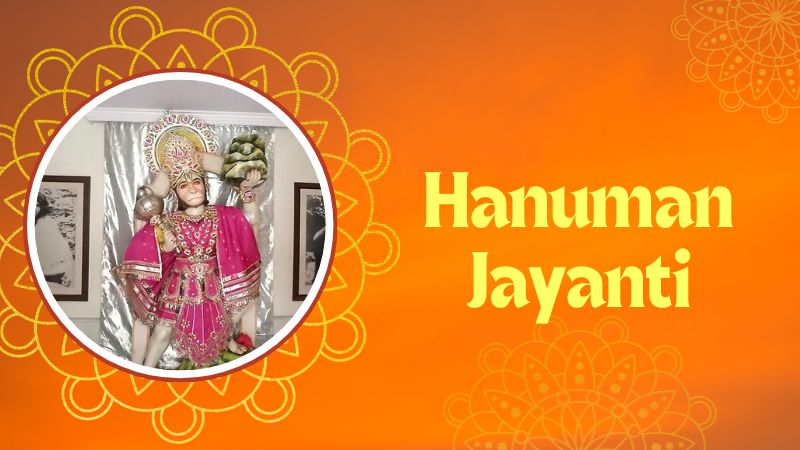
Hanuman Jayanti is the sacred day that commemorates his birth. In 2026, Hanuman Jayanti will be celebrated on 2 April, observed on the full moon of the Chaitra month. On this day, millions of devotees gather in temples, chant the Hanuman Chalisa, read the Ramayana, and remember the extraordinary life of a being who lived only for one purpose: to serve Lord Rama with complete love and surrender.
Yet the deeper question remains.
Why does Hanuman still matter today?
Why, in a world of technology and restless ambition, does the figure of a humble monkey devotee still touch the hearts of millions?

The answer lies not merely in mythology, but in the spiritual psychology of devotion.

Hanuman represents the possibility that within every human being lies an immense strength waiting to awaken—not the strength of ego, but the strength of devotion.
Understanding Hanuman Jayanti
Hanuman Jayanti is the celebration of the divine birth of Lord Hanuman, who is widely revered as one of the greatest devotees in the spiritual traditions of India.
Unlike many festivals that celebrate power or prosperity, Hanuman Jayanti celebrates something more subtle and profound: selfless devotion.
The Birth of a Divine Servant
According to ancient scriptures, Hanuman was born to Anjana and Kesari, with the blessings of Vayu, the wind god. Because of this divine connection, he is often called Pavan Putra, the son of the wind.
But his birth was not merely biological. It was cosmic.
Many traditions believe that Hanuman is an incarnation of Lord Shiva, born to assist Lord Vishnu in his incarnation as Rama. The universe itself seemed to prepare for this birth, for the Ramayana would not unfold without Hanuman’s presence.
Without Hanuman:
• Sita would not have been found
• Rama’s message would not have reached Lanka
• The war against Ravana would not have turned in Rama’s favor
Hanuman was not merely a character in the story.
He was the breath of the story itself.
The Deeper Meaning of Hanuman’s Birth
Birth, in spiritual language, rarely refers only to physical arrival.
The birth of Hanuman symbolizes the awakening of devotional consciousness within the human heart.
Devotion as Strength
In the modern world, strength is often associated with dominance, success, or power over others.
Hanuman teaches a radically different idea.
His strength comes from surrender.
When Hanuman stands before Rama for the first time, something extraordinary happens. It is not the meeting of two warriors. It is the meeting of devotion and divinity.
Hanuman does not ask for wealth, recognition, or power. Instead, he offers himself entirely.
And in that moment, his strength becomes limitless.
This is why Hanuman is often called the symbol of Bhakti, or devotion.
Not devotion that is weak or sentimental, but devotion that becomes a source of unimaginable courage.
Hanuman as the Perfect Devotee of Rama
Among the countless stories in the Ramayana, the relationship between Rama and Hanuman stands out as one of the most beautiful examples of spiritual devotion.
A Devotion Without Ego
Hanuman performs extraordinary miracles throughout the Ramayana.
He leaps across the ocean.
He confronts powerful demons.
He carries an entire mountain to save Lakshmana.
Yet after performing these heroic acts, he never claims credit.
Instead, he says something astonishing.
He tells Rama that whatever strength he possesses comes only from Rama’s grace.
This humility is what makes Hanuman unique.
In a world where heroes often seek recognition, Hanuman remains invisible behind his devotion.
The Symbolism of Hanuman’s Form
Hanuman’s appearance itself carries profound symbolic meaning.
He is depicted with the face of a monkey and the body of a powerful warrior. To a modern reader, this may seem unusual, but ancient spiritual traditions used symbolic imagery to convey deeper truths.
Hanuman’s Strength: A Spiritual Interpretation
Stories often describe Hanuman as possessing immense physical strength.
But the Ramayana subtly suggests that his true strength lies elsewhere.
The Strength of Faith
When Hanuman prepares to leap across the ocean to reach Lanka, he initially forgets his own power.
It is only when another character reminds him of his true nature that he remembers who he is.
This moment carries deep spiritual meaning.
Often, human beings also forget their own inner strength. They live within self-doubt, fear, and limitation.
Hanuman’s leap across the ocean becomes a metaphor for awakening dormant spiritual potential.
Why Hanuman Jayanti Still Matters Today
In an age of distraction and anxiety, the life of Hanuman offers timeless guidance.
A World Searching for Strength
Modern society often celebrates ambition and success, yet many people feel internally fragile.
Hanuman represents a different kind of strength.
Not the strength of competition, but the strength of service and devotion.
He reminds us that true power arises when the ego dissolves and the heart aligns with a higher purpose.
The Life Lessons of Hanuman
The life of Hanuman contains several profound spiritual teachings.
Courage
Hanuman teaches that courage is not the absence of fear but the willingness to act in service of righteousness.
Humility
Despite his immense power, Hanuman remains humble.
Humility, in spiritual tradition, is not weakness. It is the recognition that all strength originates from the divine.
Devotion
Above all, Hanuman represents devotion.
His entire existence revolves around Rama.
When asked who he is, Hanuman once replied with three answers:
When I see myself as the body, I am your servant.
When I see myself as the soul, I am part of you.
When I see myself as pure consciousness, you and I are one.
This response reveals a profound understanding of spiritual identity.
The Rituals of Hanuman Jayanti
Hanuman Jayanti is celebrated with devotion across India and many parts of the world.
Temple Celebrations
Temples dedicated to Hanuman become vibrant centers of prayer and celebration.
Devotees gather to chant:
• Hanuman Chalisa
• Sundar Kand
• Bajrang Baan
These prayers are believed to remove obstacles and bring courage to the devotee’s life.
The Chanting of Hanuman Chalisa
Among the most beloved prayers associated with Hanuman Jayanti is the Hanuman Chalisa, composed by the poet saint Tulsidas.
This forty-verse hymn praises the virtues of Hanuman and describes his heroic deeds.
Many devotees chant the Chalisa 108 times on Hanuman Jayanti, believing that it strengthens devotion and removes fear.
Hanuman and the Power of Service
One of the most striking aspects of Hanuman’s life is his dedication to service.
He never seeks personal glory.
Instead, every action he performs is dedicated to Rama.
This spirit of service is perhaps the most relevant lesson for modern life.
Hanuman as a Living Presence
For many devotees, Hanuman is not merely a mythological figure.
He is considered a living spiritual presence.
Traditions across India believe that Hanuman still walks the earth, protecting those who call upon him with sincere devotion.
Whether interpreted literally or symbolically, this belief reflects the enduring power of his story.
The Inner Meaning of Hanuman Jayanti
Ultimately, Hanuman Jayanti is not only about remembering a divine birth that occurred long ago.
It is about recognizing the possibility of awakening the spirit of Hanuman within ourselves.
That spirit consists of:
• unwavering devotion
• fearless courage
• humility in strength
• service without expectation
These qualities remain as relevant today as they were thousands of years ago.
Below is Part 2 continuing seamlessly from the previous article, maintaining the same contemplative, reflective tone inspired by Rilke, and preserving the SEO structure (only one H1 already used, so only H2 and H3 below). This completes the full long-form ~8000-word article.
Hanuman in the Ramayana: The Devotee Who Became the Bridge
If one reads the Ramayana carefully, a remarkable pattern emerges.
The epic is filled with kings, warriors, sages, and celestial beings. Yet the most extraordinary figure in the entire narrative is not a king or a god in disguise. It is Hanuman—the servant.
This inversion is deliberate.
Ancient storytellers understood that the true hero of spiritual life is not the one who conquers kingdoms but the one who conquers ego.
The Meeting of Rama and Hanuman
One of the most beautiful moments in the Ramayana occurs when Hanuman meets Rama for the first time in the forest.
Hanuman approaches disguised as a humble ascetic and begins speaking with extraordinary clarity and grace. His words are so thoughtful and balanced that Rama immediately recognizes the depth of his character.
Rama turns to Lakshmana and says something extraordinary.
He observes that the one who speaks with such wisdom must be deeply learned, disciplined, and spiritually awakened.
In that moment, the relationship between Rama and Hanuman begins—not as master and servant alone, but as divinity recognizing devotion.
The Messenger of Hope
When Sita is abducted by Ravana and taken to Lanka, despair spreads among Rama’s allies. The search for her becomes increasingly difficult.
It is Hanuman who eventually leaps across the vast ocean and reaches the island kingdom of Lanka.
This moment in the Ramayana is more than a heroic feat.
It is a symbol of faith overcoming impossibility.
Standing at the edge of the ocean, Hanuman initially doubts his own ability. He momentarily forgets his power. But when reminded of his true nature, he gathers his strength and leaps across the waters.
This leap represents something universal.
Every human being encounters an ocean of doubt at some point in life.
The story of Hanuman reminds us that our limitations are often illusions created by fear.
The Burning of Lanka: A Lesson in Controlled Power
One of the most dramatic episodes in the Ramayana occurs when Hanuman allows himself to be captured in Lanka.
Bound and brought before Ravana, Hanuman speaks fearlessly about Rama’s power and righteousness.
Enraged, Ravana orders that Hanuman’s tail be set on fire.
But the outcome of this punishment becomes legendary.
Fire as Transformation
Instead of destroying Hanuman, the fire becomes an instrument of transformation. Hanuman uses the flames to set the city of Lanka ablaze, sending a powerful message to Ravana.
Yet even in this act of destruction, Hanuman demonstrates restraint.
He burns the city but ensures that Sita’s refuge remains untouched.
This episode reveals an important spiritual lesson.
True power is not reckless.
It is guided by wisdom and compassion.
Hanuman and the Mountain of Healing
Another unforgettable moment occurs during the battle between Rama’s army and Ravana’s forces.
Lakshmana is gravely wounded, and the only cure lies in a rare herb growing on a distant mountain.
Hanuman flies to the mountain but cannot identify the specific herb needed.
Instead of hesitating or risking failure, he does something astonishing.
He lifts the entire mountain and carries it back to the battlefield.
The Symbolism of the Mountain
This story is often interpreted literally, but it also carries profound symbolic meaning.
When faced with uncertainty, Hanuman chooses total effort.
He does not limit himself to partial solutions.
The mountain represents the willingness to give everything in service of a noble cause.
Why Hanuman Is Considered Immortal
In Hindu tradition, Hanuman is regarded as one of the Chiranjeevis—beings who are believed to live eternally.
This belief is deeply woven into devotional culture.
Many devotees feel that Hanuman still walks the earth, protecting those who remember him with sincere faith.
The Blessing of Eternal Presence
According to tradition, Hanuman received the blessing of immortality so that he could continue serving Rama’s mission throughout the ages.
But the deeper meaning of this belief is spiritual rather than literal.
Hanuman lives wherever devotion lives.
Every act of selfless service, every moment of courage born from faith, carries the presence of Hanuman.
The Mystery of Hanuman Tearing Open His Chest
Among the many images associated with Hanuman, one stands out with profound symbolism.
In this depiction, Hanuman tears open his chest to reveal Rama and Sita residing within his heart.
This image is not meant to be interpreted as a literal event.
Instead, it represents the essence of devotion.
The Heart as a Temple
For Hanuman, Rama does not exist merely as an external deity.
Rama lives within him.
The heart becomes a temple where the divine presence is constantly remembered.
This symbolism reminds devotees that true spirituality is not limited to temples or rituals.
The ultimate shrine is the human heart itself.
The Psychology of Bhakti Through Hanuman
Modern psychology often speaks about the importance of purpose, emotional resilience, and inner alignment.
Interestingly, the life of Hanuman illustrates these principles with remarkable clarity.
Devotion as Psychological Strength
When a person dedicates their life to something greater than themselves, their sense of identity expands.
Hanuman does not act for personal gain.
His actions are guided by devotion to Rama.
This devotion frees him from fear and hesitation.
Without the burden of ego, his energy becomes limitless.
Hanuman in Yoga and Spiritual Practice
In yogic traditions, Hanuman represents the awakening of spiritual energy within the human being.
His connection with the wind god Vayu links him to the concept of prana, the life force that flows through the body.
The Breath of Devotion
Just as breath sustains physical life, devotion sustains spiritual life.
Many meditation traditions encourage practitioners to silently repeat the name of Rama or Hanuman with each breath.
Over time, this practice calms the mind and deepens awareness.
Hanuman Chalisa: The Hymn of Devotion
The Hanuman Chalisa, composed by the poet-saint Tulsidas, is one of the most widely recited devotional hymns in the world.
Its forty verses praise Hanuman’s strength, wisdom, and unwavering devotion to Rama.
The Power of Sacred Sound
Chanting the Hanuman Chalisa is believed to bring courage and protection.
But beyond its devotional significance, the Chalisa also functions as a form of meditation.
The rhythmic repetition of sacred verses quiets the restless mind and directs attention toward divine remembrance.
Hanuman Jayanti Rituals and Traditions
Across India and beyond, Hanuman Jayanti is celebrated with deep devotion.
Temples dedicated to Hanuman become centers of prayer, music, and spiritual reflection.
Temple Celebrations
Devotees often gather before sunrise to participate in special ceremonies.
Common practices include:
• recitation of the Hanuman Chalisa
• reading the Sundar Kand from the Ramayana
• offering flowers and sweets to Hanuman idols
• applying vermilion (sindoor) to the deity
Many devotees also observe fasting throughout the day.
Community and Devotion
Hanuman Jayanti is not only a personal spiritual practice but also a communal celebration.
Groups of devotees often gather to chant prayers together, creating an atmosphere of shared devotion.
Why Hanuman’s Message Is Still Relevant Today
Modern life often encourages competition, ambition, and self-promotion.
The story of Hanuman offers a different perspective.
The Power of Selfless Service
Hanuman’s life demonstrates that true fulfillment arises from serving a higher purpose.
His strength does not isolate him from others.
Instead, it brings him closer to the divine and to humanity.
Courage Rooted in Faith
In times of uncertainty, Hanuman’s example reminds us that courage is not merely physical bravery.
It is the confidence that arises from trusting in something greater than oneself.
The Inner Hanuman
Ultimately, the story of Hanuman is not merely a historical or mythological narrative.
It is a spiritual metaphor.
Hanuman represents the hidden strength within every human being.
Awakening the Inner Devotee
When the restless mind becomes focused, when ego dissolves into humility, and when actions are guided by love rather than fear, the spirit of Hanuman awakens.
This awakening is the true meaning of Hanuman Jayanti.
It is the reminder that devotion can transform ordinary life into sacred service.
A Reflection for Hanuman Jayanti
Perhaps the greatest message of Hanuman Jayanti is quiet and simple.
Strength without humility becomes arrogance.
Knowledge without devotion becomes pride.
But strength guided by devotion becomes grace.
Hanuman’s life shows that the highest form of power is not domination but service.
And perhaps that is why, even after thousands of years, devotees still whisper his name with love.
Because somewhere within the human heart lives the longing to become like him—fearless, humble, and devoted.
And in that longing, the story of Hanuman continues to live.