Hanuman Jayanti 2026 Rituals: Ancient Traditions, Puja Vidhi and Spiritual Meaning
There are certain days in the spiritual calendar when devotion gathers itself like a quiet tide. Temples awaken before sunrise, lamps flicker in the stillness of dawn, and the sound of sacred verses rises slowly into the morning air.
Hanuman Jayanti is one such day.
Celebrated with reverence across India and among devotees throughout the world, Hanuman Jayanti marks the birth of Lord Hanuman, the embodiment of devotion, courage, humility, and service. In 2026, the festival will be observed on 2 April, coinciding with the full moon of the Chaitra month.
Yet Hanuman Jayanti is not merely a celebration of mythology. It is a day when ancient rituals come alive with quiet meaning. Every chant, every offering, every act of fasting carries within it a deeper spiritual intention.
The rituals performed on this day—reciting the Hanuman Chalisa, chanting the Sundar Kand, offering sindoor and jasmine oil, and observing fasting—are not merely external traditions. They are symbolic gestures designed to awaken the qualities that Hanuman represents: unwavering devotion, fearless strength, and humble service.
If one listens carefully, these rituals speak a silent language.
They remind us that devotion is not simply an emotion. It is a discipline of the heart.

The Sacred Atmosphere of Hanuman Jayanti
Before exploring the rituals themselves, it is helpful to understand the spiritual atmosphere in which Hanuman Jayanti unfolds.

For devotees, the day begins long before the sun rises.
Homes are cleaned, temples decorated, and sacred lamps prepared. The air becomes filled with the fragrance of incense and flowers. Devotional songs echo through neighbourhood temples as devotees gather for prayer.
This atmosphere of reverence reflects a simple truth: rituals are not merely actions.
They are ways of preparing the heart.
When performed with sincerity, they create a space where devotion can unfold quietly within the mind.
Temple Rituals on Hanuman Jayanti
Temples dedicated to Lord Hanuman become vibrant centres of devotion during Hanuman Jayanti. Devotees gather throughout the day to participate in rituals that have been preserved for centuries.
These ceremonies are not elaborate displays but humble acts of remembrance.
Early Morning Abhishekam
Many temples begin the day with Abhishekam, a ceremonial bathing of the Hanuman idol.
Sacred substances such as milk, water, honey, and sandalwood paste are gently poured over the deity while priests chant ancient mantras.
This ritual symbolises purification.
Just as the idol is bathed, devotees reflect upon the purification of their own thoughts and intentions.
Decoration of the Deity
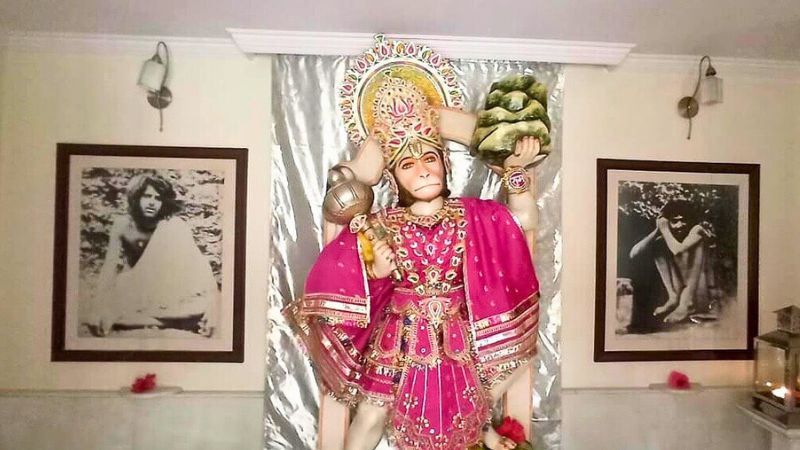
After the ceremonial bath, the idol is decorated with garlands of flowers, vermilion powder, and fragrant oils.
Hanuman idols are often covered in sindoor, the bright red vermilion associated with devotion and strength.
This practice has its origin in a beloved story.
It is said that Hanuman once applied sindoor over his entire body after learning that Sita applied vermilion for Rama’s long life. Hanuman believed that if a small amount of sindoor could ensure Rama’s well-being, covering himself entirely in it would protect his beloved lord even more.
Thus, applying sindoor to Hanuman idols symbolises complete devotion and selfless love.
The Ritual of Offering Jasmine Oil
Another traditional offering made during Hanuman Jayanti is jasmine oil.
The fragrant oil is poured over Hanuman idols or offered during prayer rituals.
Symbolism of the Offering
Jasmine flowers are associated with purity and devotion.
Their fragrance spreads gently through the air, much like the quiet influence of spiritual practice.
Offering jasmine oil represents the devotee’s wish that their life may carry the fragrance of devotion—subtle, sincere, and enduring.
Chanting the Hanuman Chalisa
Among all the rituals performed on Hanuman Jayanti, the chanting of the Hanuman Chalisa occupies a special place.
Composed by the poet-saint Tulsidas in the sixteenth century, the Chalisa is a forty-verse hymn celebrating Hanuman’s virtues and heroic deeds.
A Prayer of Devotion
The verses describe Hanuman’s strength, wisdom, humility, and unwavering devotion to Lord Rama.
For many devotees, chanting the Chalisa is more than a prayer.
It is a form of meditation.
The rhythmic repetition of its verses gradually quiets the restless mind and turns attention towards the divine.
Collective Chanting
On Hanuman Jayanti, groups of devotees often gather in temples or homes to chant the Chalisa together.
When many voices recite the same prayer in unison, the atmosphere becomes deeply moving.
The sound itself seems to carry devotion through the air.
Reciting the Sundar Kand
Another important ritual on Hanuman Jayanti is the recitation of the Sundar Kand, a chapter from the Ramayana that narrates Hanuman’s journey to Lanka in search of Sita.
The Chapter of Courage
The Sundar Kand is often considered the heart of the Ramayana.
It describes Hanuman’s leap across the ocean, his meeting with Sita, and his fearless confrontation with Ravana’s army.
Each episode reveals a different aspect of Hanuman’s character.
Spiritual Meaning
Devotees believe that reciting the Sundar Kand removes obstacles and brings strength during difficult times.
But its deeper significance lies in its symbolism.
Hanuman’s journey represents the soul’s journey through doubt, fear, and adversity in search of truth.
Fasting Traditions on Hanuman Jayanti
Fasting is another important aspect of Hanuman Jayanti observances.
Many devotees abstain from food throughout the day or consume only simple vegetarian meals.
The Discipline of Fasting
In spiritual tradition, fasting is not meant as punishment.
Rather, it is a practice of self-discipline.
By temporarily setting aside physical comforts, devotees redirect their attention towards prayer and reflection.
Simplicity of Diet
Those who observe fasting often eat fruits, milk, or light meals prepared without onion or garlic.
The simplicity of such meals reflects the spirit of the day.
Hanuman himself is remembered for his humility and restraint.
Scriptural Reading and Reflection
Many devotees spend Hanuman Jayanti reading sacred texts associated with Hanuman.
These may include:
• the Ramayana
• the Hanuman Chalisa
• the Sundar Kand
• various devotional hymns
Listening to Sacred Stories
In temples and spiritual gatherings, priests or scholars often narrate stories from Hanuman’s life.
These stories are not merely entertainment.
They function as spiritual reminders.
Through them, devotees are encouraged to reflect upon the virtues that Hanuman embodies.
The Symbolism of Hanuman Jayanti Rituals
The rituals performed on Hanuman Jayanti may appear simple on the surface, yet each carries profound symbolic meaning.
Devotion
Chanting prayers and hymns represents the devotee’s longing to remain connected with the divine.
Strength
Hanuman’s stories remind devotees that true strength arises from faith rather than ego.
Humility
The offerings made in temples symbolise gratitude and surrender.
The Role of Community in Hanuman Jayanti
Another beautiful aspect of Hanuman Jayanti is its communal spirit.
Unlike solitary spiritual practices, this festival often brings people together.
Temples become places where strangers sit side by side, chanting prayers with shared devotion.
In that moment, social distinctions seem to dissolve.
Devotion becomes the only identity.
Hanuman as Protector
Many devotees believe that remembering Hanuman’s name brings courage and protection.
For centuries, people have turned to Hanuman in times of fear, illness, or uncertainty.
His image—carrying a mace and standing fearless—symbolises protection from negativity.
The Inner Meaning of Ritual
While rituals are important, spiritual teachers often emphasise that their true purpose lies within.
Lighting a lamp symbolises the awakening of inner awareness.
Offering flowers symbolises the blossoming of devotion.
Chanting prayers symbolises the transformation of thought.
When performed with sincerity, these acts become pathways to deeper understanding.
A Quiet Lesson from Hanuman
Perhaps the most powerful lesson of Hanuman Jayanti is hidden within Hanuman’s own life.
Despite possessing immense strength, he never sought recognition.
Every action he performed was dedicated to Lord Rama.
In this humility lies the essence of devotion.
The Relevance of Hanuman Jayanti Today
In the modern world, life often moves quickly.
People are surrounded by constant noise, distraction, and ambition.
Hanuman Jayanti offers a moment of pause.
It reminds us that strength can coexist with humility.
That devotion can coexist with courage.
And that service, when performed with sincerity, can transform ordinary life into something sacred.
A Reflection for the Day
As evening approaches and the temple lamps glow softly in the twilight, devotees often sit quietly after the final prayers.
The chants fade into silence.
Incense drifts gently through the air.
In that stillness, one begins to understand the true meaning of Hanuman Jayanti.
The rituals were never merely about offerings or hymns.
They were about remembering the possibility of devotion.
And in that remembrance, the spirit of Hanuman continues to live—not only in temples, but in the quiet strength of the human heart.